

How to make budget for a kitchen renovation
Have you ever wondered why some kitchen makeovers are flawless and stay within budget, while others break down in chaos midway through?
The planning is nearly always where the difference is found.
One of the most thrilling improvements a homeowner can undertake is a kitchen makeover, but it's also one of the most likely projects to go over budget. The expenses mount up more quickly than anticipated due to new cabinets, gleaming appliances, chic benchtops, and all the necessities. Even the simplest remodel can turn into a financial nightmare in the absence of a clear financial plan. All these might make you wonder these important queries like-
- How do you create a renovation budget that actually works?
- How do I find affordable kitchen renovation services near me that allow for both function and flair?
- Moreover, what is even a realistic budget for a kitchen renovation?
Well, hang on there! We get your concerns, and that's why we came up with this blog as a solution. Stick with us till the end and find all your answers in this guide.
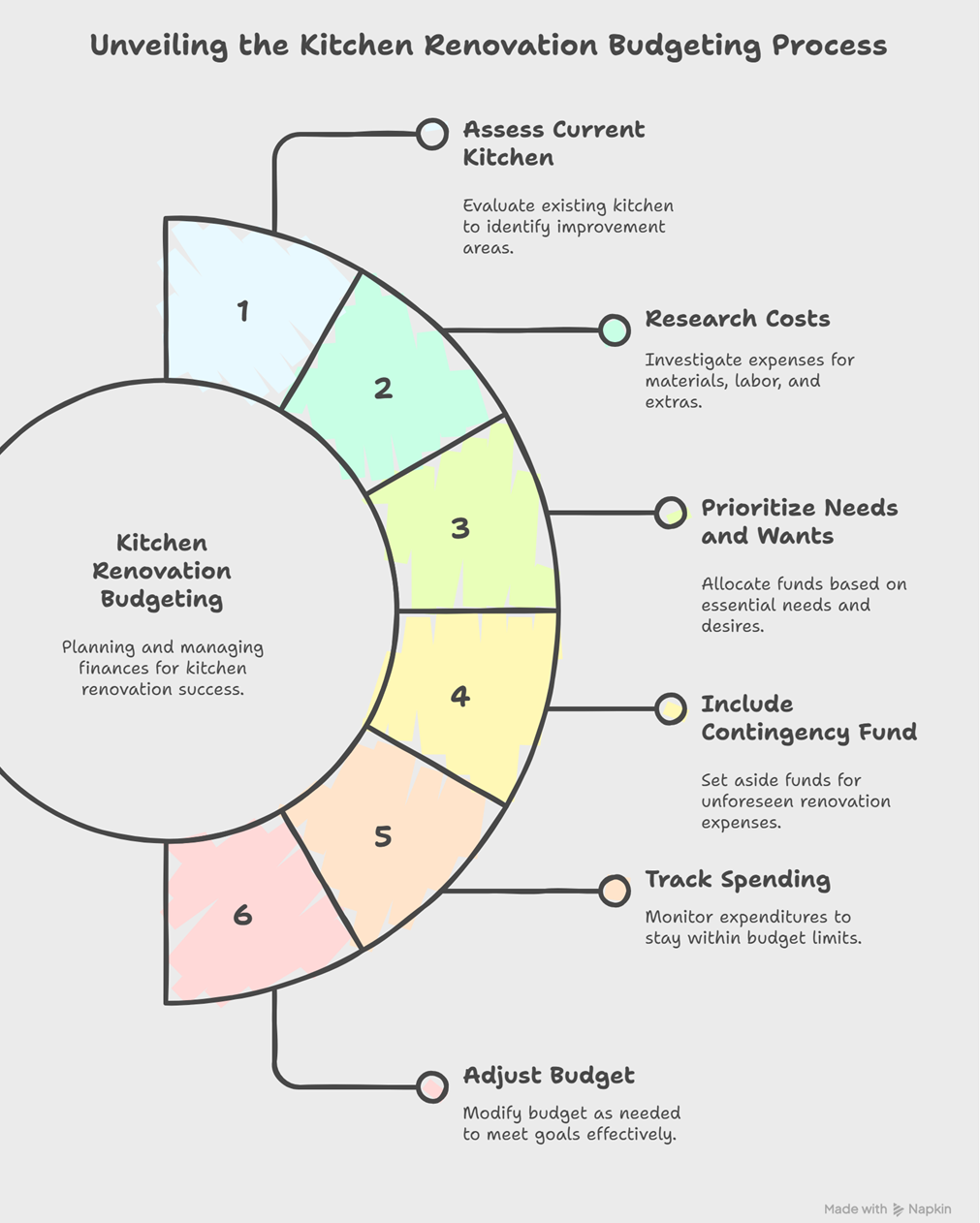
Build a Kitchen Renovation Budget That Works in 7 Smart Steps
Kitchen cabinet manufacturers will surely give your kitchen an upgrade, but before that, there are some crucial steps you must consider to stay on a budget.
Step 1: Assess Your Current Kitchen
A clear understanding of the current space lays the foundation for a realistic budget and helps avoid unnecessary spending later on.
⚈ Determine what needs to change
Take a critical look around your kitchen. Are the cabinets old-fashioned but structurally sound? Is the arrangement useful, or do you frequently run into awkward spots when preparing meals? Perhaps the lighting is drab and outdated, or the flooring has deteriorated in high-traffic areas.
Make two basic lists. One for things that really need to be replaced, and another for things that can be updated or made better. This exercise helps distinguish between "must-fix" problems like broken cabinets or malfunctioning wiring and purely decorative preferences like changing the colour of the benchtop.
⚈ Reuse and refresh
Not everything old needs to go. In fact, some of the best-looking kitchens reuse existing elements cleverly.
If you previously got your custom cabinets installed by professional kitchen cabinet makers in Melbourne, it might still be in good condition. So, consider repainting cabinets or updating handles, as it can transform the look of your space without a hefty price tag. Keeping the same layout also helps avoid major plumbing or electrical relocation costs, which can quickly eat into your budget.
Step 2: Define Your Renovation Goals
Every successful renovation begins with a specific goal. Without one, it's simple to get sidetracked by fads and forget what your kitchen actually needs.
⚈ Full remodel or cosmetic upgrade?
The decision to go with a lighter refresh or a full overhaul fixes the planning for the project.
Redesigning the layout, adding new cabinets, or updating the fixtures and appliances are all part of a complete remodel. It's perfect for older kitchens that need better flow or aren't functional.
In contrast, a cosmetic upgrade concentrates on surface enhancements. Consider fresh paint, updated lighting, contemporary benchtops, or new splashbacks. Though it can give a clean-up on a low budget, it often doesn't serve the purpose of making an outdated kitchen more efficient.
⚈ Put needs before wants
Establish priorities after your vision is clear. Prioritise necessary improvements like more durable cabinets, better lighting, or better storage options before treating yourself to design extras like eye-catching taps or high-end finishes.
Making deliberate financial decisions guarantees that the renovation will increase the property's long-term value and daily usability. The goal of a well-budgeted kitchen is to make wise investments where they are most needed, not to restrict creativity.
Step 3: Set a Realistic Budget Range
Once you know your goals, it's time to attach numbers and get an idea of how much you might need to spend.
⚈ Work Out Your Spending Limit
Determine your realistic spending limit before selecting materials or contacting contractors. Generally speaking, you should budget between 5 and 15% of the overall value of your house for kitchen remodelling. This range maintains the project's proportionality to the value of your property.
Of course, your own personal goals are also important. Focus on functional updates and high-end, long-lasting finishes, whether you're remodelling to sell or plan to stay in that space for an extended period of time. It will improve everyday living and increase resale value.
⚈ Break Down the Costs
To get a total cost of the makeover project, you can briefly section the work that needs to be done and allocate a specific budget for each. Here we present you with a better idea-
|
Category |
Estimated Budget % |
\What It Covers |
|
Good Quality Cabinets & Storage |
35–40% |
Cabinetry, shelves, hardware |
|
Appliances |
10–15% |
Cooktop, oven, dishwasher |
|
Benchtops |
10–15% |
Stone, laminate, timber |
|
Flooring |
10% |
Tiles, vinyl, engineered wood |
|
Plumbing & Electrical |
10–15% |
Rewiring, outlets, plumbing |
|
Labour |
20–25% |
Builder, tiler, painter |
|
Contingency |
10% |
Unexpected costs |
Tip: Always include a 10–15% safety margin for unforeseen issues like plumbing leaks or price hikes.
Step 4: Research Costs and Compare Quotes
Now that a budget framework has been established, it's time to examine actual data.
⚈ Do Market Research
Start by exploring what materials and finishes actually cost in today's market. Prices can vary dramatically depending on quality, brand, and location. So, keep notes of average prices for items like cabinets, benchtops, tiles, and appliances.
The best way to have an idea in this digital world is by browsing kitchen cabinet makers' websites. While comparing budgets, don't compromise the quality of work and industry experience. Talking to friends or family who've recently renovated can also give valuable insight into what certain upgrades truly cost.
⚈ Get Multiple Quotes
After you have a design concept and a shortlist of materials, begin contacting contractors and tradespeople. A thorough breakdown of labour, materials, and timelines should be included in each of the three quotes you request. Experienced kitchen joinery in Melbourne, like Cabco Kitchens, even mentions their whole process on their website for a better understanding of the timeframe and requirements, so try to choose a transparent company like this.
Additionally, consider more than just the total amount when comparing quotes. Consider the value as well.
Step 5: Balance DIY and Professional Work
Knowing where to draw the line between do-it-yourself projects and professional expertise can make all the difference in a kitchen renovation.
⚈ Know What You Can Do Yourself
There are some kitchen renovation projects that are ideal for active participation. If done correctly, painting walls, installing new splashback tiles, or putting together flat-pack furniture can all result in significant cost savings. Simple weekend tasks that don't call for specialised equipment or certifications include installing open shelving or changing out tapware as well.
⚈ Leave the Technical Work to Experts
It is best to leave the design and installation of your kitchen cabinets to the experts. Professional cabinet makers guarantee flawless alignment, superior finishes, and lasting strength. It can be challenging to accomplish all of these things by yourself. Their accuracy and skill not only save time but also improve the overall appearance and value of your kitchen.
Step 6: Account for Hidden and Ongoing Costs
Even with meticulous preparation, some costs may go unnoticed. Later budget surprises can be avoided by being aware of these hidden expenses.
⚈ Typical Hidden Costs
Expenses that are minor but essential frequently mount up. These include the cost of waste removal or skip bin rental, inspection or permit fees, delivery or installation fees, and the provision of a temporary kitchen during the course of renovations. So, before the work starts, prepare with some extra expenses and plan for backup space for initial kitchen tasks.
⚈ Plan for continued value
Consider more than just the immediate expenses. Long-term cost savings on bills and maintenance can be achieved by making an initial investment in durable materials, LED lighting, and energy-efficient appliances.
Make sure the manufacturer of your cabinet uses high-quality products from reliable vendors. By including these costs in the budget, the kitchen will continue to be economical and valuable for many years to come.
Step 7: Track, Adjust, and Stay Flexible
Since kitchen renovations rarely go as planned, it's essential to keep costs under control.
⚈ Track Your Spending
Use a spreadsheet, budgeting app, or even a special notebook to keep a thorough record of every expense. Keep track of every delivery, invoice, and payment as they occur. It is easier to identify areas where costs are increasing and take corrective action before they impact the overall budget when you and your contractor review this on a regular basis.
⚈ Prepare to Reallocate
The secret to running a successful renovation is flexibility. Spending elsewhere should be adjusted if one category exceeds the budget. For example, you can modify the budget by initially spending less on kitchen gadgets if you spend a little more on high-quality, long-lasting cabinets.
This might mean delaying optional upgrades or reducing decorative elements. Being prepared to reallocate funds guarantees that the project remains on course while maintaining its essential components.
Common Budget Mistakes to Avoid
.png)
If certain pitfalls are not avoided, even the most meticulously planned kitchen renovation may encounter difficulties. So, here we have listed a few of them so that you can avoid them-
- Starting a project without a contingency fund is one of the worst mistakes you can make. If you're not prepared, unforeseen expenses like unexpected plumbing bills or changes in material prices can quickly blow your budget.
- Putting style before function is another trap. Following the newest trends at the expense of functional requirements like durability, workflow, or storage frequently results in regret later.
- Lastly, last-minute changes typically call for additional labour, materials, and rework, which rapidly drives up the budget. Therefore, pick a company like Cabco Kitchens that shows you a 3D model of your idea in advance so you can make the necessary adjustments at first.
Conclusion
A thoughtfully designed kitchen makeover strikes a balance between cost, style, and functionality. It is possible to create a space that looks fantastic, functions well, and adds long-term value to the house by avoiding common budget errors, keeping a careful track of expenses, and remaining adaptable throughout the project. Limiting spending is only one aspect of thoughtful budgeting. It's more about making wise decisions that will allow you to have the premium kitchen of your dreams without worrying about money.


.png?20261024221519214+1100)